Start with two separate choices: cuff and fit
A cuffed beanie has a folded band around the lower edge. A cuffless beanie has no turned-up band in its intended wearing position. Separately, a close-fitting crown sits nearer the head, while a slouchy crown leaves extra fabric that drapes toward the back. These are not mutually exclusive categories: a slouchy beanie can also have a cuff.
Look at both the front and side views. Is the photographed fold fixed or adjustable? Is the hat shown as it should be worn? Those questions tell you more than a style name alone.
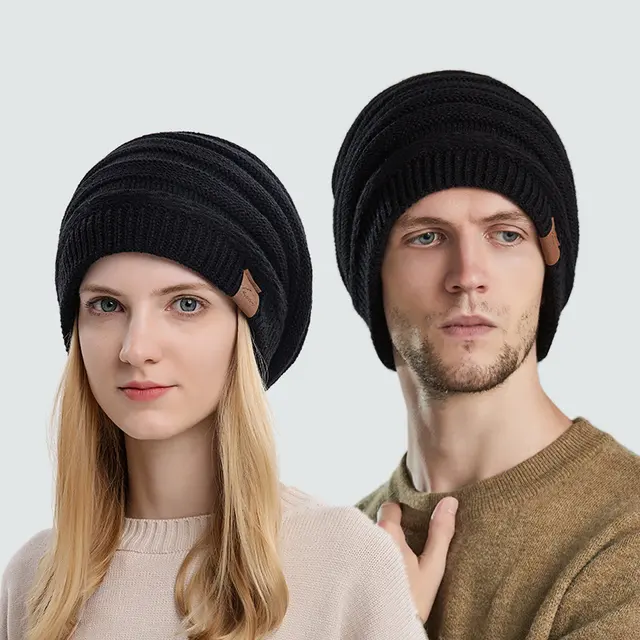
Cuffed beanies: check the band before planning a logo
The cuff creates a distinct front band. If your collection needs a logo, use the actual sample to establish its position rather than placing artwork on a generic mockup. The height of the fold, the knit texture and the way the hat stretches all affect the usable area.
Record the fold height in the approved wearing position. For embroidery, a patch or a sewn label, ask the supplier to confirm suitability for the chosen model and show a decorated sample. A label visible in a catalog photograph does not mean every logo size, attachment method or placement is available.
Slouchy beanies: compare the side profile, not just the front
A slouchy shape has additional crown length that gives a relaxed silhouette. The amount of drape depends on the construction and how the wearer positions the hat. A front-facing image may not show the difference clearly.
When comparing samples, photograph them from the same angle and use the same wearing position. Check whether the crown keeps the intended silhouette after handling. For a fashion-led range, make the required amount of drape part of your brief instead of relying only on the word “slouchy.”
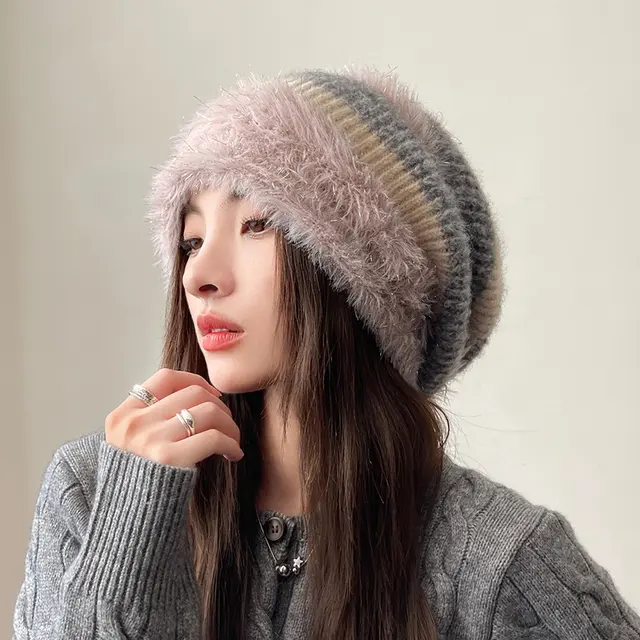
Knit appearance is not a material specification
Ribs, cables, a smooth surface or a fuzzy finish describe what you can see. They do not establish the fiber composition, lining, finished weight or care instructions. Do not describe a style as wool, cashmere or a particular blend solely because of its photograph.
Ask for the declared yarn composition, lining details where applicable, and care information for the exact model. Compare handfeel, stretch and recovery on physical samples. If a collection requires a particular performance claim, agree what evidence is needed before using it on packaging or a product listing.
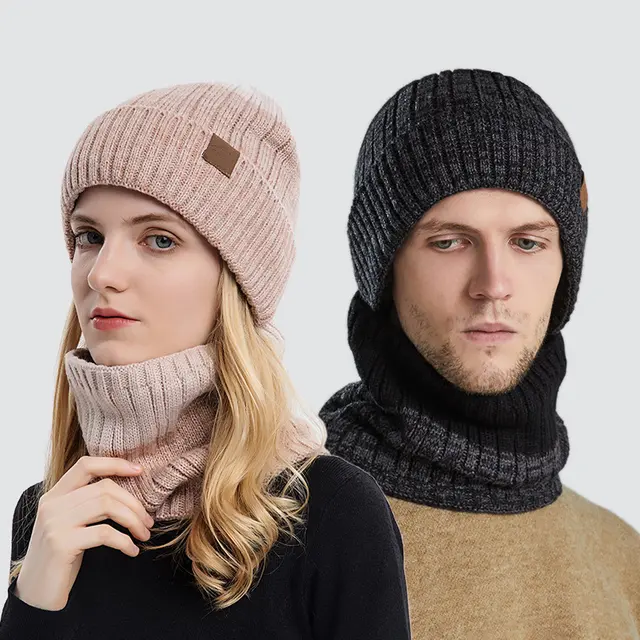
A quick comparison for your shortlist
| Detail | What the photo can show | What to confirm |
|---|---|---|
| Cuff | Folded band and visible label position | Fold height and proposed logo area |
| Crown | Close-fitting or relaxed silhouette | Finished height and intended wearing position |
| Knit | Visible ribs, pattern and surface texture | Fiber composition, lining and handfeel |
| Fit | Fit on the photographed wearer only | Finished dimensions, stretch and target size range |
| Color | Color appearance on your screen | Physical color reference or approved sample |
Prepare a sample and quotation checklist
- List the exact Huanji model numbers you want to compare.
- Specify your target wearer, destination market and intended season.
- State the required fit and any measured dimensions, rather than assuming “unisex” means one fit for everyone.
- Provide a color reference and logo artwork, with the preferred placement.
- Give an estimated quantity by model and color, plus packaging requirements.
- Ask which details are available as shown and which need development. Confirm availability, sampling, pricing and delivery timing directly.
Keep the approved sample with its model number and agreed specifications. When you reorder, use that record to check whether anything has changed.
Explore the models, then send your shortlist
Use the beanie catalog and slouchy beanie selection to compare actual products. Add the models you want to the inquiry list. For a reference-led project, see custom hat development.
Send your selected models and notes through the inquiry page. You can also read our guide to writing a useful inquiry before contacting us.
Request a quote